
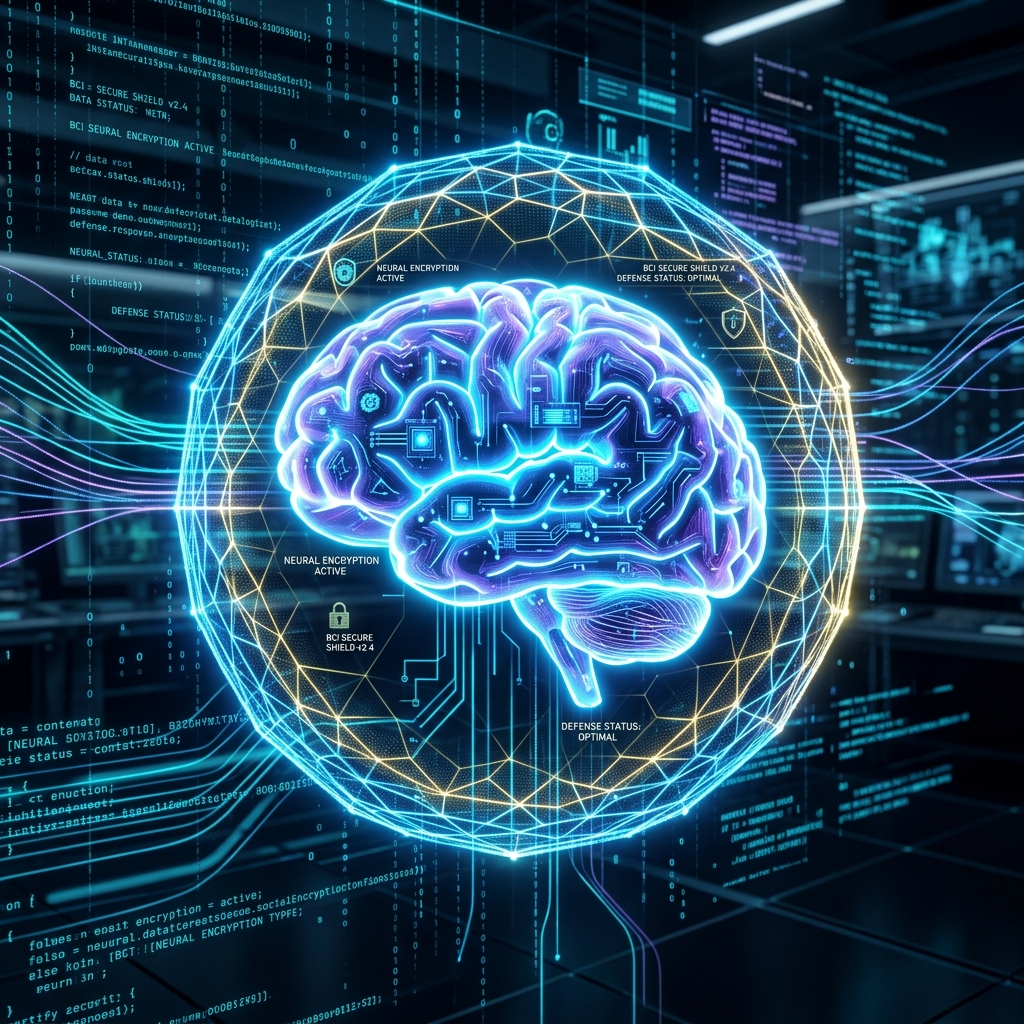
The Bio-Cybernetic Paradigm Shift
For decades, digital authentication and user intent were mediated through physical interfaces: keyboards, touch displays, and biometric sensors like fingerprints or facial geometry. Brain-Computer Interfaces (BCIs)—both non-invasive electroencephalography (EEG) headbands and invasive intracortical microelectrode arrays—are collapsing this barrier by directly interpreting electrophysiological oscillations into digital commands.
While BCI breakthroughs restore mobility for paralyzed patients and introduce immersive neuromorphic control in computing, they simultaneously expose our most intimate biometric vector: continuous, raw neural activity. Unlike a password or an API key, you cannot rotate or re-hash your brainwaves once they are compromised.
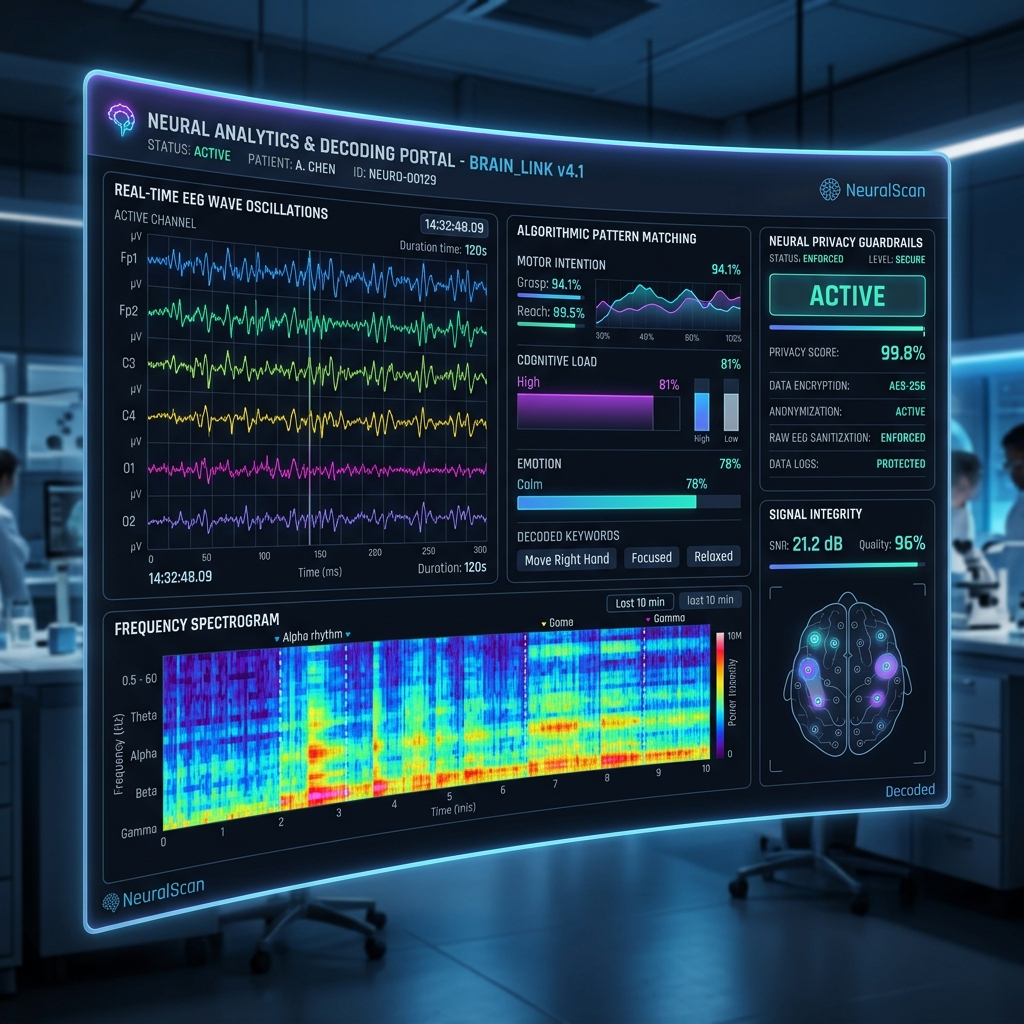
Anatomy of a Neural Attack Vector
Cybersecurity researchers in neurotechnology categorize BCI vulnerabilities into three distinct attack surfaces:
- P300 Subliminal Probing: When a human brain recognizes familiar stimuli (such as an address, a PIN code digit, or an enterprise login screen), an involuntary event-related potential called the P300 wave spikes ~300 milliseconds later. Malicious applications can covertly flash visual stimuli beneath conscious awareness to extract sensitive secrets directly from brainwave responses.
- Signal Interception & Side-Channel Extraction: Consumer-grade BCI peripherals frequently transmit unencrypted or weakly obfuscated telemetry over standard Bluetooth Low Energy (BLE) protocols. Threat actors can sniff packet streams and apply machine learning classifiers to reconstruct cognitive states, emotional valence, and intended keystrokes.
- Active Neural Manipulation: Closed-loop neuromodulation systems—which both read brain signals and apply deep brain stimulation (DBS)—introduce catastrophic safety hazards if unauthorized actors manipulate stimulus intensity, timing, or target brain regions.
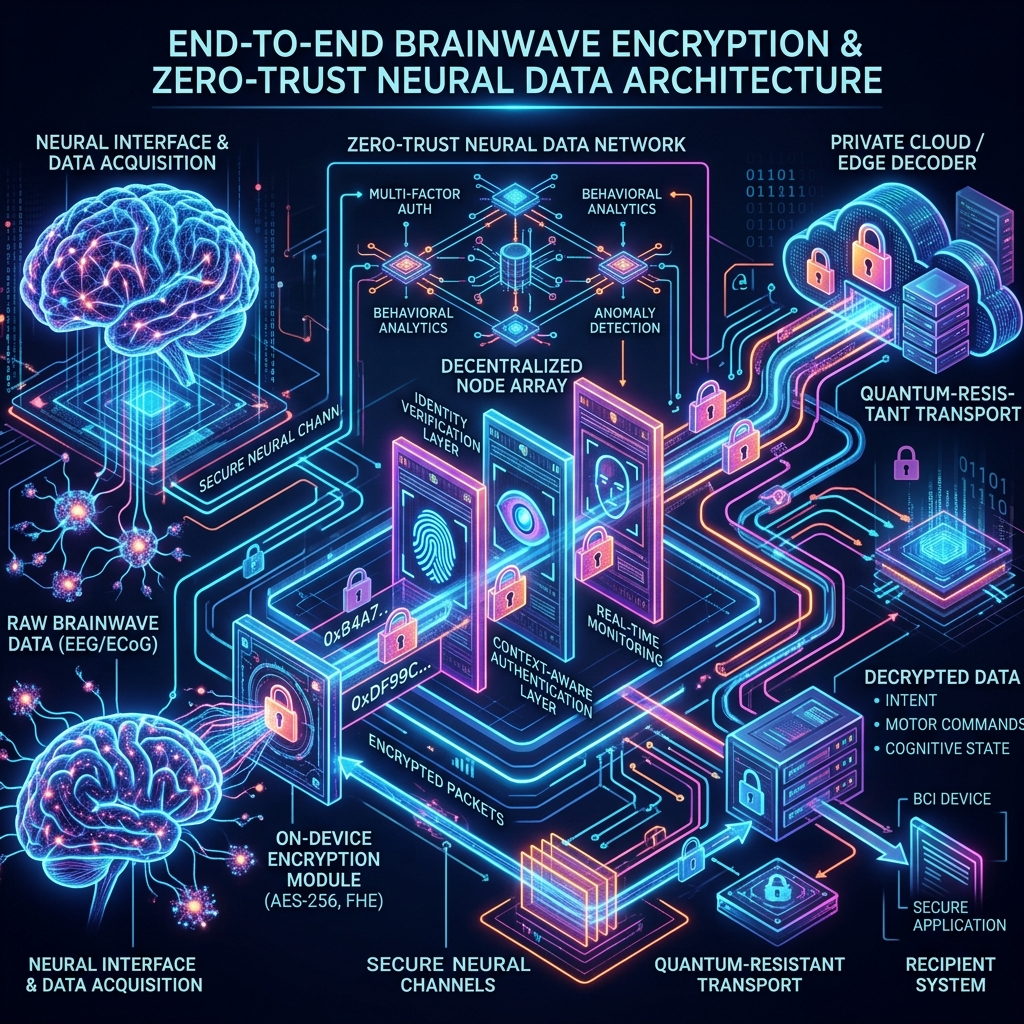
Engineering Zero-Trust Neuro-Data Infrastructure
Defending neural telemetry demands an architectural paradigm shift. Enterprise AI and medical device manufacturers must treat brainwave signals not as raw telemetry streams, but as cryptographically protected biometric tokens:
- On-Chip Sanitization: Raw microvolt waveforms should never leave the local BCI controller. Edge ASICs must perform signal decomposition, stripping raw cognitive context and transmitting only discretized, authenticated intent tokens.
- Fully Homomorphic Encryption (FHE): When cloud-based foundation models are required to process multi-channel EEG spectrograms, homomorphic encryption allows inference to run directly on ciphertext without ever decrypting sensitive neural states in memory.
- Context-Aware Biological Firewalls: Deploying anomaly detection agents that monitor communication channels for unnatural spike trains, out-of-band stimulus injection, or unauthenticated firmware overrides.
Regulatory Frontiers: The Birth of Neurorights
Standard data privacy frameworks like GDPR, HIPAA, and CCPA were designed for historical transaction records and health charts—they were never conceived for continuous involuntary neural telemetry. Pioneer jurisdictions, including Chile and Colorado, have begun passing constitutional amendments recognizing "Neurorights": the absolute legal right to cognitive liberty, mental privacy, and psychological continuity.
For organizations operating at the intersection of AI, health technology, and high-security computing, understanding neural cybersecurity is no longer science fiction. As bio-interfaces proliferate, safeguarding mental integrity will become the ultimate cybersecurity frontier.